
A Family Safari for the Great Migration: The Masai Mara, Lewa and Diani Beach
There is a moment, somewhere on the Mara's open grass, when a guide cuts the engine and the whole vehicle goes quiet. In the distance a low rumble builds, and then the horizon itself seems to move: thousands of wildebeest, flanks dusty and heads low, pouring toward the river in a single restless mass. For a child seeing it for the first time, it rarely needs explaining. It is simply the biggest thing they have ever watched happen.
Kenya's Great Migration is one of the few travel experiences that genuinely earns its reputation, and a Kenya family safari built around it happens to be one of the more forgiving safari settings for families, provided the trip is built around the right camps, the right season and a clear head about health precautions. The families I plan for most often start in the Masai Mara for the drama of the migration, move on to the quieter conservancy of Lewa for a change of pace, and finish on the beach at Diani, rather than flying straight home from the bush. It is that shift in rhythm, from adrenaline to calm to sand between toes, that tends to be what turns a good family holiday in Kenya into the kind of trip everyone still talks about years later.
To start planning your Kenya safari, get in touch with Sarah.
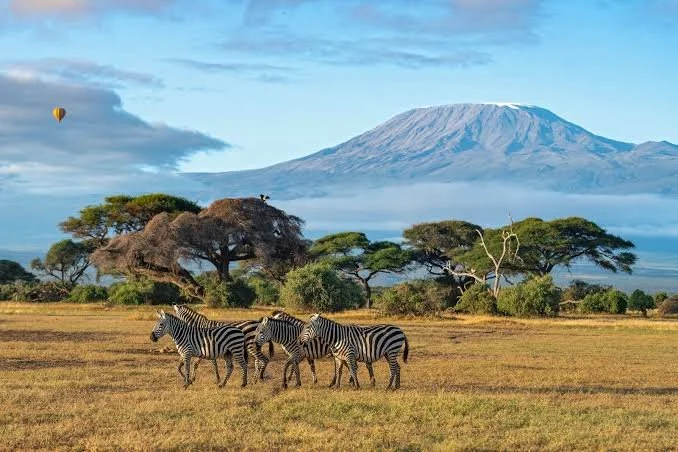
Maasai Mara views
Why the Masai Mara works for families
The Mara has a particular advantage over some of Kenya's more remote reserves: distances between sightings are short, game drives can be kept to a sensible length for younger attention spans, and many family-friendly Masai Mara camps have spent years refining what a family safari actually needs, from junior ranger programmes to private vehicles that mean nobody has to negotiate nap times with other guests. Cottar's 1920s Camp in the Mara's southern conservancies has built its whole identity around multigenerational safaris, with a resident naturalist who runs bush school for children and a genuine sense of occasion at dinner. Governors' Camp, closer to the reserve itself and within easy reach of the river crossings, offers family tents and a long track record with younger travellers. For families with slightly older children, Kicheche Bush Camp in the Naboisho Conservancy keeps things intimate and low key, with a minimum age that suits a house rule of no under-eights on shared vehicles, so it is worth checking ages carefully before booking. Angama Mara, perched on the edge of the Oloololo Escarpment with what may be the finest view in Kenya, has also become a strong choice for families wanting a touch more polish without losing the sense of wilderness.
Get in touch with Sarah to book your Kenya safari with the personal service that makes the difference.
When to travel for the crossings
Working out the best time to visit the Masai Mara for the migration is less exact science than most itineraries suggest, but there are patterns worth building a holiday around. The herds are generally in the Mara from July through to October, having moved north from the Serengeti in search of fresh grazing, and the dramatic river crossings at the Mara and Talek rivers tend to cluster around August and September, when the animals are at their most concentrated. This window also happens to coincide with Kenya's dry season, which means clearer skies, easier game viewing and considerably less mud to contend with on transfer days, always a practical bonus with children in tow. It is worth being honest with clients that nature does not run to a booking calendar. A camp in the right location during the right months puts a family in the best possible position, but no operator can promise a crossing on a given afternoon, and building in two or three nights rather than one gives the odds a proper chance to work in your favour.
Lewa: a quieter chapter after the Mara
After the pace of the Mara, Lewa Wildlife Conservancy in Kenya's north is where a family safari changes register. It is a working conservancy rather than a reserve, built around one of the country's great rhino conservation stories, and the low visitor density means the days open up beyond the standard game drive: walking safaris with an armed guide, on the back of a horse for confident older children, or by mountain bike alongside zebra and giraffe grazing at a distance. Lewa House and Lewa Safari Camp are both long-standing, family-run properties with the kind of easy warmth that comes from decades of hosting multigenerational groups, and Lewa Wilderness offers similar terrain with its own working farm attached, which younger children in particular tend to love. Two or three nights here is usually enough to feel the shift from the Mara's intensity into something slower, before the final leg to the coast.
Diani: finishing on the south coast
From Lewa, the families I plan for usually finish their Kenya family safari on the south coast at Diani, rather than heading straight home from the bush. Diani Beach, south of Mombasa, is a long run of white sand shaded by palms and protected by an offshore reef, which keeps the water calm and shallow enough for young swimmers, a genuine practical advantage over some of Kenya's more exposed coastline. AfroChic Diani is a boutique, design-led property that families with older children tend to love, while The Sands at Nomad offers more space and a stronger beachfront setup for those with younger ones in tow. Getting there from Lewa generally means a light aircraft back through Nairobi and on to Diani's Ukunda airstrip, which is worth building into the schedule as a travel day rather than rushing it, but the change of pace once you land is immediate and, for most children, very welcome after several early starts on game drives and a rhino tracking walk or two.
Malaria and practical health planning
The Masai Mara and the Diani coast both sit within malaria zones, and malaria in Kenya is not a detail to gloss over when travelling with children on safari. Lewa's higher altitude generally means lower mosquito activity than the Mara or the coast, but it is not risk-free, so the sensible approach is to treat the whole itinerary as a malaria area rather than relaxing partway through. It is worth speaking to a GP or a travel health clinic well ahead of departure, ideally six to eight weeks before travel, since the right antimalarial and the right precautions depend on each family member's age, weight and medical history. Beyond medication, the practical habits matter just as much: covering up in the early evening when mosquitoes are most active, using a reliable repellent on exposed skin, and choosing camps and hotels that take nets and screening seriously, which the properties mentioned above all do as standard. None of this should overshadow the planning. It simply belongs on the checklist alongside flights and visas, addressed properly and then set aside so the trip itself can be enjoyed without anxiety.
Building the itinerary
The families who come back from this trip glowing are usually the ones who resisted the urge to pack in too much. Four or five nights in the Mara, ideally split across two camps to vary the terrain and the game, two or three nights in Lewa to let the pace drop, and four or five nights unwinding on the beach at Diani, tends to give a holiday proper shape without exhausting anyone. It is also worth building a night in Nairobi into the plan, whether at the start or as a buffer between legs, rather than treating every connection as tight. Safaris rarely run to the minute, and neither, in my experience, do families with young children.
If a Kenyan family safari is on your list for next year, I would love to help you shape it, from the camps to the crossings to Lewa to the coast at the end. Do get in touch and we can start putting the details together.
To start planning your Kenya safari, get in touch with Sarah today.