
Top European Destinations for Summer 2026 (That Aren't the Ones Everyone Else Is Going To)
Europe in summer is one of the great joys of travel. But if you've ever found yourself queuing for a boat in Santorini or circling the Amalfi Coast behind a convoy of coaches, you'll know that popular doesn't always mean relaxing and relaxing is exactly what a summer holiday should be.
The good news is that Europe is quietly full of destinations that offer everything you're dreaming of, extraordinary scenery, world-class food, beautiful hotels and genuine culture, without the crowds that can make the more famous spots feel exhausting rather than restorative.
As a luxury travel agent, I spend a significant amount of time researching and visiting destinations so that I can give my clients honest, first-hand guidance. These five destinations are at the top of my list for summer 2026, not because they're trending, but because they're genuinely exceptional. Each one offers a different kind of experience. All of them will stay with you long after you've come home.
If any of them catch your attention, get in touch — I'd love to help you plan something truly special.
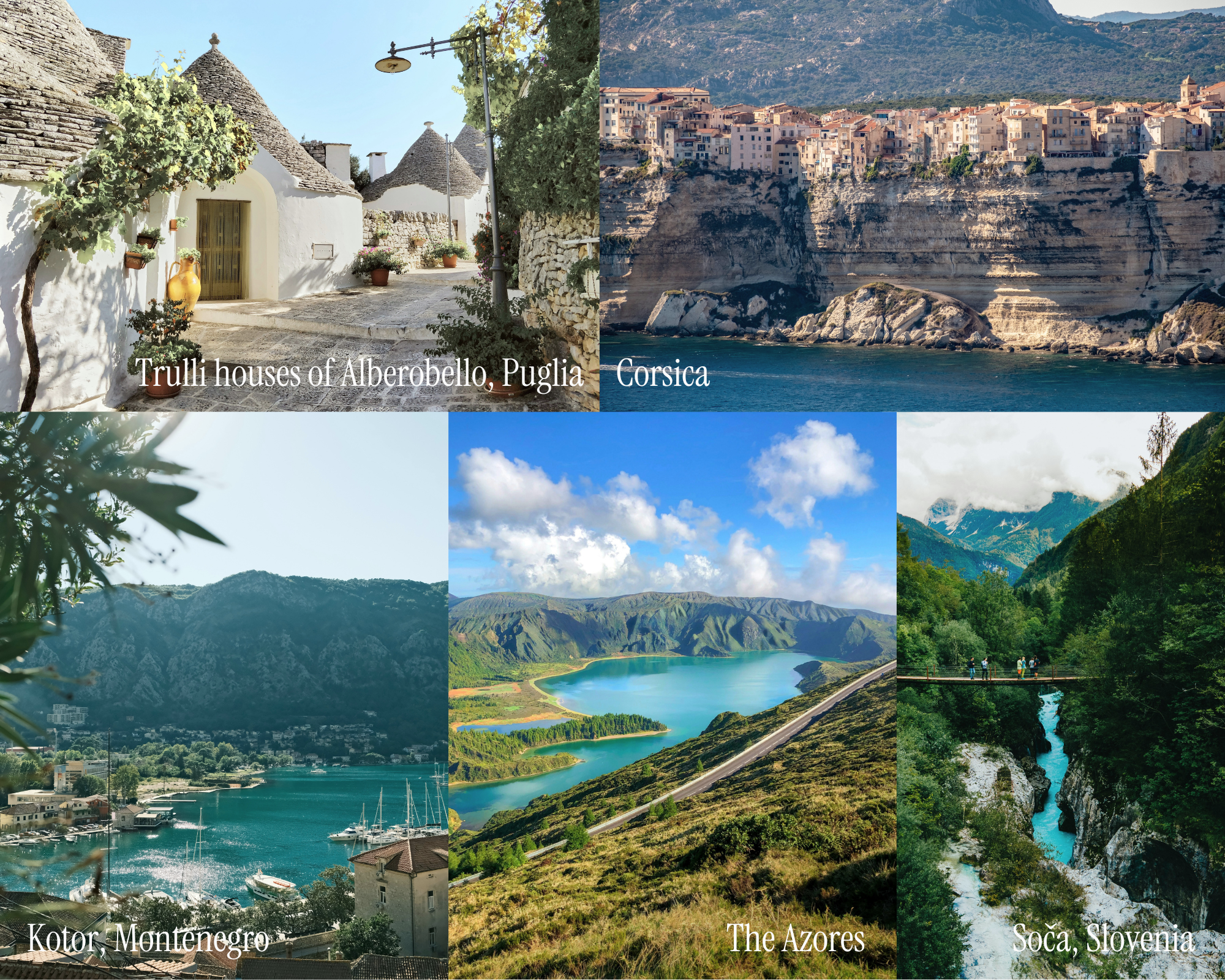
My top 5 destinations in Europe
1. Montenegro: Europe's Last Secret Coastline
Montenegro has been quietly building its reputation among well-travelled clients of mine for a few years now, and summer 2026 feels like the moment it steps fully into the spotlight but before the masses arrive.
The Bay of Kotor is one of the most dramatic landscapes in Europe: deep fjord-like waters ringed by medieval walled towns and mountains that fall almost directly into the sea. It's staggering, and yet it remains remarkably peaceful compared to the Croatian coast just a short drive away. That contrast, grandeur without the crowds, is exactly what makes it so compelling right now.
WHERE TO STAY
The arrival of One&Only Portonovi has been a turning point for luxury travel in Montenegro. Set directly on the Boka Bay, it's one of those rare hotels where the location does as much work as the property itself — and the property is exceptional. Private beach, a Chenot Espace wellness spa, and some of the best seafood you'll eat anywhere in the Mediterranean.
What to do
Hire a private boat and explore the bay at your own pace, stopping at hidden coves inaccessible by road
Walk the medieval walls of Kotor's old town early in the morning, before the day-trippers arrive
Take a short boat trip to the island church of Our Lady of the Rocks — one of the Adriatic's most beautiful and least-visited spots
Visit the village of Perast, a perfectly preserved baroque town on the water's edge, and dine at a small waterfront restaurant as the sun sets over the bay
One of the things I love most about Montenegro is how easy it is to experience it privately. Private guides, private boats, early-morning access. All of this is entirely achievable here in a way that simply isn't possible in more saturated destinations.
Planning tip: Aim for late June or early September. The weather is beautiful, the bay is calm, and you'll share it with far fewer people than in peak July or August.
If Montenegro is calling to you, get in touch and I'll start putting together something truly special.
2. Puglia, Italy: Where Italy Finally Slows Down
f you love Italy but find Rome and the Amalfi Coast increasingly overwhelming in summer, Puglia is the answer you've been waiting for.
This is southern Italy at its most unhurried. Whitewashed hill towns, ancient olive groves, long golden beaches and a cuisine so deeply rooted in its landscape that eating here feels like a genuine act of discovery. Burrata that tastes unlike anything you'll find outside of Italy. Pasta shaped by hand in farmhouse kitchens. Orecchiette with broccoli rabe in a tiny osteria on a sunlit cobbled street.
WHERE TO STAY
Borgo Egnazia, near Fasano, is one of the finest resort hotels in Europe. A beautifully designed masseria that manages to feel simultaneously grand and genuinely homely. It's the kind of place that's very hard to leave, which means building at least a few entirely unscheduled days into your itinerary is entirely justified.
For something more intimate, the region's smaller masserias, traditional farmhouse estates converted into boutique hotels, offer a more immersive experience of Puglia's landscape and character.
What to do
Explore the trulli houses of Alberobello — the extraordinary conical stone dwellings that look like something from a fairy tale, and are best visited at dawn before the coaches arrive
Wander the baroque streets of Lecce, sometimes called the Florence of the South, with a local guide who can take you beyond the tourist trail
Swim in the sea caves of Polignano a Mare — one of the most photographed spots in southern Italy, and for very good reason
Take a private cooking class in a local masseria kitchen, learning to make the region's signature dishes from scratch
Visit a family-run olive grove for a private tasting — Puglia produces around 40% of Italy's olive oil, and experiencing that first-hand is one of the great pleasures of the region
Puglia is becoming more popular, which is precisely why 2026 is a good time to go — before it becomes the next Amalfi Coast.
Planning tip: June and September are both exceptional. The weather is warm, the light is golden and the beaches are far more pleasant than at the height of August.
Puglia is one of my most-requested destinations right now, and availability at the best masserias goes quickly. Get in touch to secure your place before it's gone.
3. Slovenia: The Most Beautiful Country You've Never Considered
I never tire of recommending Slovenia to clients who want extraordinary natural scenery without the compromise of sharing it with half of Europe.
It is genuinely, strikingly beautiful in a way that surprises even seasoned travellers. Lake Bled is the image most people have seen: a glacial lake, a tiny island church, a clifftop castle reflected in impossibly still water. And yes, it really does look like that in real life. But Slovenia's appeal runs far deeper than one famous view.
The Soča Valley, with its turquoise river cutting through alpine meadows and limestone gorges, is one of the most beautiful places I've ever visited. Ljubljana, the capital, is compact and charming in a way that larger cities rarely manage. An afternoon wandering its castle, riverside cafés and covered market is one of those quietly perfect travel experiences.
WHERE TO STAY
The Grand Hotel Toplice sits directly on the shore of Lake Bled and has been welcoming guests since 1931. Its lakeside terrace is one of the great spots in Europe for breakfast on a summer morning, the kind of view that makes you put your phone down and simply sit with it.
What to do
Row across Lake Bled to the island church — a tradition that goes back centuries, and one that remains genuinely magical
Walk or cycle through the Vintgar Gorge, a 1.6km canyon of emerald water just a short drive from Bled
Take a day trip into Triglav National Park — dramatic mountain scenery that feels a world away from the lake
Explore the Postojna Cave system, one of the largest cave networks in Europe and a genuinely extraordinary experience
Drive the Vršič Pass — one of the most beautiful mountain roads in Europe, at its best on a clear summer morning
Slovenia is small enough to explore properly in a week, and its scale makes it ideal for a fully bespoke itinerary, one that moves between lake, valley, mountain and city at a pace that lets you breathe.
Planning tip: June and early July are ideal. The days are long, the mountains are accessible, and the lake is at its most serene before the peak of summer.
Slovenia is one of those destinations that genuinely surprises people in the best possible way. If you'd like to explore it, get in touch and I'll design a bespoke itinerary around you.
4. The Azores, Portugal: Volcanic, Wild and Unlike Anywhere Else in Europe
The Azores sit in the middle of the Atlantic, technically part of Portugal, but closer to North America than to Lisbon and that sense of being somewhere genuinely apart from the world is exactly what makes them so compelling.
These nine volcanic islands are unlike any other destination in Europe. São Miguel, the largest, is a place of crater lakes, geothermal hot springs, black sand beaches and landscapes so intensely green they look almost tropical. You can walk the rim of a caldera in the morning and soak in natural thermal pools by the afternoon. The pace here is entirely different from anywhere else on this list, and for many of my clients, that's exactly the point.
WHERE TO STAY
Furnas Boutique Hotel Thermal & Spa is a beautiful contemporary property built around the island's famous geothermal springs, with spa treatments designed around the volcanic waters. For something with more of a sense of place, the Octant Hotels collection, spread across several of the islands, offers beautifully designed properties that feel deeply connected to the landscape around them.
What to do
Walk the Sete Cidades crater — twin lakes, one green and one blue, inside a dormant volcano. One of the most arresting natural landscapes in the world
Whale watching in the waters around São Miguel — the Azores is one of the best places on earth to see sperm whales, blue whales and dolphins in the open ocean
Soak in the Poça da Dona Beija hot springs at dusk, when the thermal mist and surrounding vegetation create an almost otherworldly atmosphere
Explore Faial and Pico islands on a multi-island itinerary — the volcanic cone of Pico is Portugal's highest point, and the crossing between the two islands by ferry is breathtaking
Dine on the freshest possible seafood at a local restaurant — the octopus, limpets and tuna are extraordinary
The Azores are not for everyone. They reward travellers who want to be genuinely moved by somewhere, rather than simply photographing it. For the right person, they are completely unforgettable.
Planning tip: June through September is the best window. Warm, calm seas, and the best conditions for whale watching and island hopping.
If the Azores sound like the kind of trip that would genuinely move you, I'd love to help you plan it. Get in touch and let's talk through what's possible.
5. Corsica, France: The Mediterranean as It Used to Be
Corsica is the kind of place that makes you quietly wonder why you've been going elsewhere.
It is officially part of France, but feels distinctly, proudly its own. With its own dialect, its own food culture, its own landscape that doesn't look quite like anywhere else. The mountains rise steeply from the sea. The maquis, dense, fragrant scrubland of rosemary, lavender and wild herbs, scents the whole island. The beaches are genuinely exceptional: wide, white and lapped by clear water that rivals anything in the Caribbean, with none of the long-haul flight.
WHERE TO STAY
La Villa in Calvi is a beautifully positioned boutique hotel overlooking the bay. Its pool terrace, with views across the water to the Genoese citadel, is one of the most beautiful spots I can think of for a long summer lunch. In the south, the area around Bonifacio and Porto-Vecchio offers some of the most secluded villas and intimate boutique hotels in the Mediterranean, ideal for those who want complete privacy.
What to do
Hire a private boat and explore the Réserve Naturelle de Scandola — a UNESCO-listed marine reserve of extraordinary volcanic rock formations and utterly clear water, accessible only by sea
Walk a section of the GR20 — one of Europe's most famous long-distance trails, crossing the mountainous spine of the island. Even a short guided stretch gives you a sense of how wild and dramatic the interior is
Visit Bonifacio, a walled citadel town perched dramatically on white limestone cliffs above the sea — one of the most striking townscapes in Europe
Explore the Niolo Valley and its mountain villages — completely off the tourist trail, and a world away from the coastal resorts
Eat well: Corsican charcuterie, the local sheep's milk cheese brocciu, fresh pasta with wild boar, and chestnuts in everything. The food alone is reason enough to visit.
Corsica receives a fraction of the visitors of Sardinia or the Greek islands. In summer, it remains genuinely possible to find a beach that feels entirely your own, a rarity in the Mediterranean that is increasingly hard to come by.
Planning tip: Early July and September are the sweet spots. Warm, the sea is perfect, and the island's roads and beaches are significantly quieter than the height of August.
Corsica is one of those destinations I love recommending to clients who feel like they've seen it all — because it reliably changes their mind. Get in touch if you'd like to explore it together.
How Far in Advance Should You Book a Summer 2026 European Trip?
For popular destinations in peak season, the honest answer is: as soon as possible.
The best hotels in Europe, particularly smaller boutique properties and highly sought-after villa rentals, book out far earlier than most people expect. I regularly speak with clients who have left it until spring and found that the hotels they wanted, in the locations they wanted, are no longer available. It's a disappointing position to be in, and an entirely avoidable one.
As a general rule:
Boutique hotels and villas: Book 9–12 months in advance for summer 2026
Larger luxury hotels: 6–9 months in advance, though the best rooms and suites go sooner
Private experiences (guides, boats, exclusive access): These can often be arranged closer to the time, but for peak summer, earlier is always better
Flights: Prices rise significantly as summer approaches — booking early will usually save money
Working with a travel agent means you have someone actively monitoring availability, making calls on your behalf and drawing on existing relationships with hotels to secure rooms that may not be publicly available. It genuinely makes a difference.
If you're thinking about summer 2026, now is the right time to start the conversation. Get in touch and I'll make sure you're not left scrambling for second-best options.
Planning Your Perfect European Summer
The difference between a good summer holiday and an exceptional one usually comes down to the details. The right hotel in the right location, an experience that turns out to be the highlight of the trip, a table at a restaurant you'd never have found on your own.
That's exactly what I'm here for. Whether you already know where you want to go, or you'd like guidance on which of these destinations might suit you best, I'd love to help you build something that exceeds what you imagined.
Get in touch to start planning your summer 2026 trip — and make sure the hotels and experiences you want are still available.